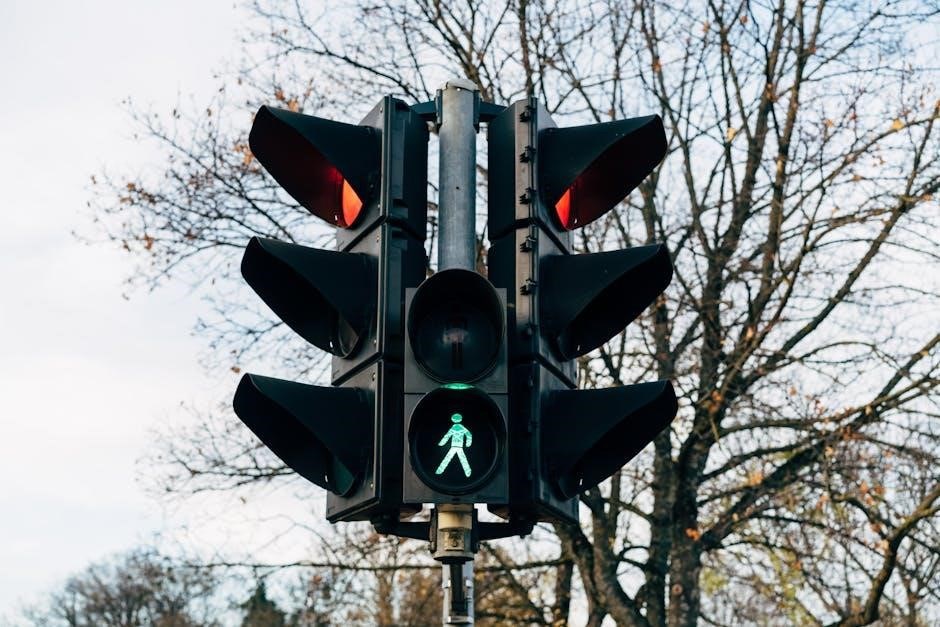
The Alberta Traffic Safety Act establishes rules for safe road usage within the province. Accessing the official Alberta Traffic Safety Act PDF provides detailed regulations.
It governs drivers, vehicles, and highways, ensuring public safety and order on Alberta’s roadways.
Purpose of the Act
The primary purpose of the Alberta Traffic Safety Act is to promote and enhance road safety for all users throughout the province. This comprehensive legislation aims to prevent collisions, reduce injuries, and save lives by establishing a clear framework of rules and regulations governing vehicular traffic. The Act seeks to foster a culture of responsible driving and ensure that Alberta’s roadways are as safe as possible for motorists, pedestrians, cyclists, and other vulnerable road users.
Furthermore, the Act facilitates the efficient flow of traffic while balancing the needs of various transportation modes. It outlines the rights and responsibilities of drivers, vehicle owners, and other stakeholders, providing a legal basis for enforcement and accountability. By clearly defining acceptable and unacceptable behaviours on the road, the Alberta Traffic Safety Act strives to minimize risks and create a predictable environment for all. Accessing the complete Alberta Traffic Safety Act PDF reveals the detailed provisions designed to achieve these crucial safety objectives, including stipulations regarding vehicle maintenance, driver licensing, and collision reporting procedures.
Scope and Applicability
The scope of the Alberta Traffic Safety Act is remarkably broad, encompassing virtually all forms of vehicular traffic operating within the province’s boundaries. This includes, but isn’t limited to, cars, trucks, motorcycles, buses, and even specialized vehicles like farm equipment when used on public roadways. The Act’s provisions apply to both public and private property when those properties are considered ‘highways’ as defined within the legislation – a key definition detailed in the full Alberta Traffic Safety Act PDF.
Applicability extends to all individuals operating a motor vehicle in Alberta, regardless of residency. Visitors and tourists are equally bound by the Act’s regulations. The Alberta Traffic Safety Act also governs the licensing of drivers, the registration of vehicles, and the insurance requirements for operating a vehicle. It further addresses issues such as impaired driving, speeding, and distracted driving, establishing penalties for violations. Understanding the full extent of the Act’s reach requires a thorough review of the official Alberta Traffic Safety Act PDF, which clarifies specific scenarios and exceptions to the general rules.

Accessing the Alberta Traffic Safety Act PDF
Obtaining a copy of the official Alberta Traffic Safety Act PDF is crucial for anyone seeking a comprehensive understanding of Alberta’s traffic laws. The most reliable source is the Alberta Queen’s Printer website, which hosts the current, legally-binding version of the Act. A direct link can typically be found through searches like “Alberta Traffic Safety Act PDF” on major search engines, leading directly to the government’s official publications page.
Users should ensure they are downloading the most up-to-date version, as amendments and revisions are periodically made to the legislation. The Alberta Traffic Safety Act PDF is a substantial document, often exceeding several hundred pages, encompassing detailed regulations and legal definitions. It’s also advisable to consult related regulations, such as the Use of Highway and Rules of the Road Regulation, which further clarifies specific aspects of the Act. Downloading and reviewing the Alberta Traffic Safety Act PDF empowers drivers and citizens with the knowledge necessary to navigate Alberta’s roadways safely and legally.
Key Definitions within the Act
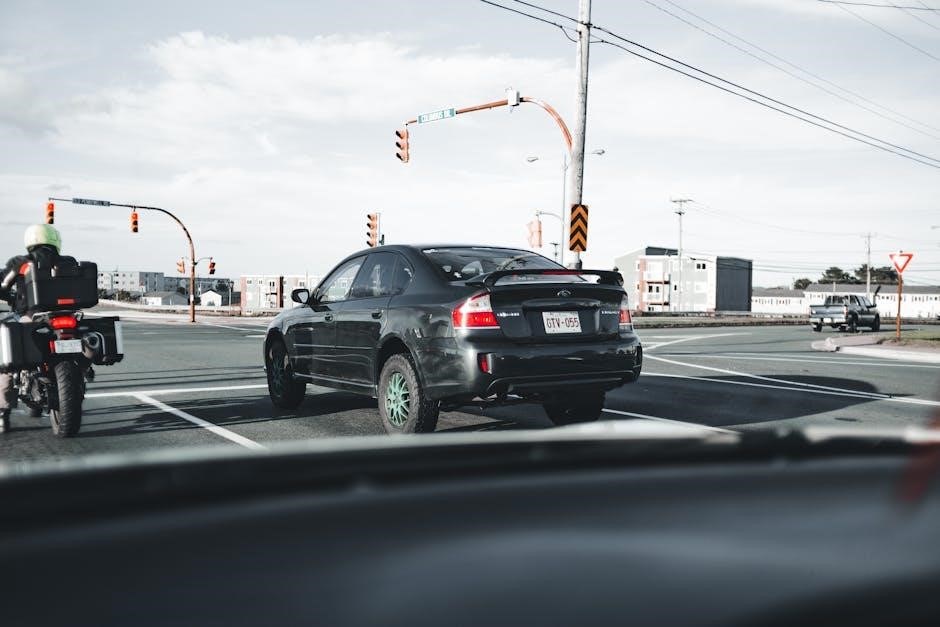
The Alberta Traffic Safety Act PDF precisely defines terms like “highway” and “oneway highway,” clarifying legal interpretations. Understanding these definitions is vital for proper application of the Act’s rules.
Definition of “Highway”
According to the Alberta Traffic Safety Act PDF, the definition of “highway” is remarkably broad, encompassing much more than simply paved roads. It includes every public road, street, lane, alley, and even any area ordinarily used by the public for vehicular travel. This expansive definition extends to include bridges, viaducts, and even ferries utilized for public transportation.
Crucially, the Act clarifies that a “highway” isn’t limited to areas maintained or constructed by the government. Privately owned roads accessible to the public also fall under this definition, subjecting them to the regulations outlined within the Act. This comprehensive approach ensures consistent application of traffic laws across all areas used for public vehicular movement.
Furthermore, the definition explicitly includes any area designated for vehicular use, even if temporarily or seasonally. This means construction zones, parking lots open to the public, and even certain recreational trails can be considered highways under specific circumstances. Understanding this broad scope is essential for all drivers and road users in Alberta, as it dictates where the rules of the Alberta Traffic Safety Act apply.
Definition of “Oneway Highway”
The Alberta Traffic Safety Act PDF precisely defines a “oneway highway” as a roadway permitting traffic flow in only one direction. However, a critical distinction is made: this definition excludes highways divided by a median into two separate roadways. Even if opposing traffic flows are segregated, if a median physically divides the road, it’s not considered a single “oneway highway” under the Act.
This distinction is vital for understanding signage and traffic control measures. A highway with a median is treated as two separate roadways, each potentially with its own speed limits and rules. A true “oneway highway,” conversely, has no physical separation allowing for opposing traffic, relying solely on directional regulations.
The Act’s specificity aims to prevent confusion and ensure drivers correctly interpret traffic flow patterns. Misinterpreting a divided highway as a “oneway highway” could lead to dangerous situations. Therefore, the Alberta Traffic Safety Act emphasizes the absence of a median as a defining characteristic. Drivers must always observe signage and road markings to confirm the permitted direction of travel, especially when encountering potentially ambiguous road configurations.

Definition of “Park” and Related Exceptions
According to the Alberta Traffic Safety Act PDF, “park,” when prohibited, signifies allowing a vehicle to remain stationary in a single location. However, the Act acknowledges legitimate exceptions to this general rule. These exceptions are crucial for facilitating necessary activities and ensuring reasonable access.

Specifically, the Act permits vehicles to remain stationary while actively engaged in loading or unloading passengers. This exception recognizes the practical need for temporary stops to allow individuals to enter or exit a vehicle safely. This provision supports public transportation and personal travel.
Furthermore, the definition doesn’t encompass situations involving legitimate vehicle maintenance or emergency assistance. While not explicitly detailed in this excerpt, related regulations within the Alberta Traffic Safety Act likely address these scenarios. Understanding these nuances is vital for drivers to avoid unintentional violations.
The precise wording of the “park” definition and its exceptions underscores the Act’s intent to balance traffic flow with the practical needs of road users. Drivers should consult the full Alberta Traffic Safety Act PDF for a comprehensive understanding of parking regulations and permissible exceptions.
Collision Reporting in Alberta
Alberta Traffic Safety Act PDF mandates reporting collisions causing injury or exceeding $2,000 in damages. Collision Reporting Centres facilitate this process, meeting legal and insurance requirements for all involved parties.
Role of Collision Reporting Centres
Collision Reporting Centres play a crucial role in fulfilling the requirements outlined within the Alberta Traffic Safety Act PDF. These facilities serve as designated locations where members of the public can officially report traffic collisions, ensuring compliance with provincial legal obligations and facilitating insurance claims processing. They streamline the reporting process, offering a centralized and efficient system for documenting collision details.
These centres aren’t simply administrative hubs; they provide a vital service by collecting comprehensive information about each incident. This data is then utilized for statistical analysis, contributing to a better understanding of collision patterns and informing future traffic safety initiatives across Alberta. By accurately documenting the circumstances surrounding each collision, these centres aid in identifying areas where improvements to road infrastructure or driver education are needed.
Furthermore, reporting through a Collision Reporting Centre ensures that all necessary documentation is completed correctly, minimizing potential delays or complications with insurance claims. Trained staff are available to assist individuals in navigating the reporting process and answering any questions they may have, providing support during what can often be a stressful time. Utilizing these centres is a key component of responsible driving and adherence to Alberta’s traffic laws.
Reporting Requirements: Injury and Damage Thresholds (>$2,000)
According to the Alberta Traffic Safety Act PDF, specific criteria dictate when a traffic collision must be reported to authorities. A primary trigger for mandatory reporting is the occurrence of any injury, regardless of severity, sustained by any party involved in the incident. This encompasses everything from minor scrapes and bruises to more serious, life-threatening injuries.
Beyond injuries, a significant financial threshold also necessitates reporting. Any collision resulting in property damage exceeding $2,000, combined across all vehicles involved, requires official documentation. This means even if damage to a single vehicle is less than $2,000, but the total damage across multiple vehicles surpasses that amount, a report is legally required.
Failing to report collisions meeting these criteria can lead to penalties, as outlined within the Act. It’s crucial for drivers to understand these thresholds to ensure full compliance with Alberta law. Accurate reporting contributes to comprehensive data collection, aiding in traffic safety analysis and improvement initiatives. Drivers should consult the full Alberta Traffic Safety Act PDF for complete details and clarification on reporting obligations.
Legal Obligations for Reporting Collisions
The Alberta Traffic Safety Act PDF clearly defines the legal duties drivers have following a traffic collision. Beyond simply reporting incidents meeting the injury or damage thresholds, drivers have specific obligations to ensure accurate and timely information is provided to the appropriate authorities. This includes providing a truthful account of the events leading up to, during, and immediately after the collision.
Drivers are legally required to exchange information with all other parties involved, including names, addresses, driver’s license numbers, vehicle registration details, and insurance information. Failure to do so constitutes a breach of the Act and can result in penalties. Furthermore, drivers must cooperate fully with any police investigation and provide any requested documentation.
The Act emphasizes the importance of reporting to Collision Reporting Centres where applicable, streamlining the process and ensuring consistent data collection. Deliberately providing false information or attempting to conceal details of a collision is a serious offense with potentially severe legal consequences. A thorough understanding of the Alberta Traffic Safety Act PDF is vital for all drivers to fulfill their legal responsibilities.
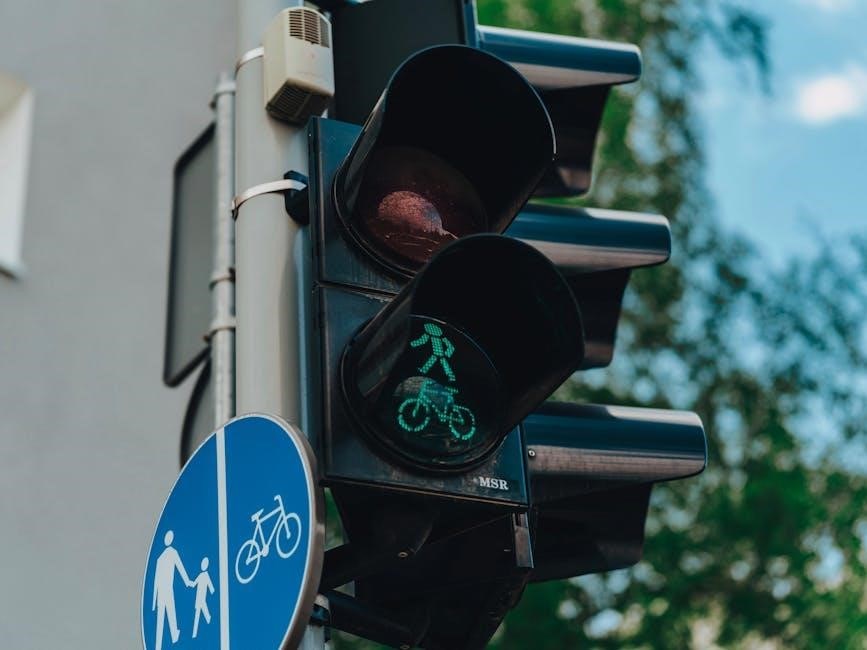
Rules of the Road – General Provisions
The Alberta Traffic Safety Act PDF details essential rules governing highway use. These provisions cover right-of-way, speed limits, and lane usage, ensuring orderly traffic flow and maximizing safety for all road users.
Right-of-Way Rules
The Alberta Traffic Safety Act PDF meticulously outlines right-of-way regulations, crucial for preventing collisions and maintaining orderly traffic flow. Generally, vehicles must yield the right-of-way to pedestrians in crosswalks and to vehicles already lawfully within an intersection or approaching it closely.

When approaching a stop sign, drivers must come to a complete stop and yield to all other traffic, proceeding only when it is safe to do so. At uncontrolled intersections – those without signs or signals – the vehicle arriving first typically has the right-of-way. However, drivers must exercise caution and yield to vehicles approaching from the right.
Emergency vehicles, displaying flashing lights and sirens, always have the right-of-way. Drivers are legally obligated to pull over to the right side of the road and stop until the emergency vehicle has passed. Furthermore, specific rules apply to merging traffic, roundabouts, and situations involving vehicles making turns. Understanding and adhering to these right-of-way rules, as detailed in the Act, is paramount for safe driving in Alberta. Failure to yield can result in significant penalties and, more importantly, serious accidents.
Speed Limits and Regulations
The Alberta Traffic Safety Act PDF comprehensively details speed limits and associated regulations across the province. Maximum speed limits vary depending on the type of highway and road conditions. Typically, the maximum speed on highways is 110 km/h, though this can be reduced due to weather, construction, or other hazards. On most rural roads, the limit is 100 km/h, while in urban areas, it’s generally 50 km/h.
However, these are general guidelines; posted speed limits always take precedence. Drivers are legally obligated to adhere to the speed limit indicated by signage. The Act also addresses speed limits in specific zones, such as school zones and playground zones, where significantly reduced speeds are enforced during designated hours.
Furthermore, the Alberta Traffic Safety Act outlines penalties for exceeding the speed limit, which can include fines, demerit points, and even license suspension. Drivers must adjust their speed to account for factors like visibility, traffic density, and road surface conditions. Safe driving requires not only obeying posted limits but also driving at a speed appropriate for the prevailing circumstances, as detailed within the official document.
Lane Usage and Restrictions
The Alberta Traffic Safety Act PDF outlines specific rules regarding lane usage and restrictions to ensure efficient and safe traffic flow. Generally, drivers must stay in the right-most lane unless overtaking another vehicle, preparing to make a left turn, or if the right lane is blocked or otherwise unavailable. The left lane is primarily intended for passing.
High Occupancy Vehicle (HOV) lanes are designated for vehicles carrying a specified number of passengers, as detailed in the Act, aiming to reduce congestion. Restrictions also apply to the use of specific lanes by certain types of vehicles, such as commercial trucks, on particular highways or during specific times. These restrictions are clearly indicated by signage.
The Alberta Traffic Safety Act also addresses lane discipline, prohibiting unnecessary lane changes and weaving through traffic. Drivers must signal their intentions before changing lanes and ensure it’s safe to do so. Failure to comply with lane usage regulations can result in fines and demerit points. Understanding and adhering to these rules, as outlined in the official PDF, is crucial for maintaining order and preventing collisions on Alberta’s roadways.

Driver Responsibilities and Penalties
The Alberta Traffic Safety Act PDF details driver duties, including accident reporting. Non-compliance results in penalties like fines, demerit points, or license suspension.
Ticket revocation is also possible.
Duty to Report Accidents
The Alberta Traffic Safety Act PDF explicitly outlines a driver’s legal obligation to report collisions meeting specific criteria. This duty isn’t merely a suggestion; it’s a firm requirement under provincial law, designed to facilitate thorough investigations and ensure appropriate responses to incidents. Specifically, drivers must report any collision resulting in injury to any person involved, regardless of severity.
Furthermore, the Act mandates reporting for collisions where the combined property damage to all vehicles involved exceeds $2,000. This threshold applies cumulatively, meaning the total damage across all impacted vehicles determines the reporting requirement. Failing to report a collision that meets these criteria can lead to significant legal consequences.
Reporting is typically done through a Collision Reporting Centre, streamlining the process and ensuring all necessary information is collected. These centres are equipped to handle the administrative aspects of collision reporting, relaying information to both law enforcement and insurance providers. Drivers should be prepared to provide details about the incident, including location, time, vehicle information, and a description of events. Accurate and timely reporting is crucial for maintaining road safety and fulfilling legal obligations as defined within the Alberta Traffic Safety Act PDF.
Consequences of Non-Compliance
The Alberta Traffic Safety Act PDF clearly details the penalties for failing to adhere to its regulations, particularly regarding the duty to report collisions. Non-compliance isn’t simply overlooked; it carries substantial legal ramifications for drivers. A primary consequence is the potential for fines, which can vary depending on the severity of the infraction and any associated aggravating factors.
Beyond financial penalties, failing to report a collision as required by the Act can lead to a criminal charge. This is especially true in cases involving injury or significant property damage. A conviction can result in a criminal record, impacting future employment opportunities and travel possibilities. Furthermore, non-compliance can directly trigger a review of a driver’s license.
Authorities, including those overseeing the Detroit Tigers ticket policies (as an example of strict enforcement), reserve the right to revoke or suspend driving privileges. This suspension can range from a temporary period to a complete revocation, depending on the nature of the offense. The Alberta Traffic Safety Act PDF emphasizes that responsible road usage includes fulfilling all reporting obligations, and neglecting this duty carries serious consequences for drivers within the province.
Ticket Revocation and Suspension Rights
The Alberta Traffic Safety Act PDF outlines comprehensive rights regarding ticket revocation and suspension, providing drivers with avenues for recourse. While initial tickets issued for violations stand, drivers possess the right to dispute them through a formal process, potentially leading to revocation if evidence supports their claim. However, repeated or serious offenses significantly increase the likelihood of license suspension.
Suspension periods vary based on the severity of the infraction, ranging from short-term restrictions to complete revocation for extended durations. Notably, the Act mirrors principles seen in other enforcement areas, like the Detroit Tigers’ ticket policy, where privileges can be revoked for non-compliance. Drivers facing suspension have the right to appeal the decision through an administrative review process.
Furthermore, the Alberta Traffic Safety Act PDF details reinstatement requirements, often including completion of driver improvement courses or demonstration of responsible driving behavior. Understanding these rights is crucial for drivers navigating traffic violations. The Act aims to balance public safety with fairness, offering drivers opportunities to rectify their driving records and regain full driving privileges after a period of suspension.